
How to Boost SEO Engagement in a Downturn Using Seasonal Dates
- #SEO
- #Seasonality
- #Engagement
- #CTR

When your pages still rank but clicks fall, the cause is usually weaker demand, less persuasive snippets or search features absorbing clicks, not a ranking loss. Diagnose it in Google Search Console, rewrite titles and descriptions for what people need right now, and prepare seasonal pages 60 to 90 days before each demand peak.
TL;DR
- Strong position plus low interest equals low CTR. In a downturn, people search less and click more selectively, so snippets that speak to their budget win.
- Use Search Console to separate three problems: demand (impressions fall), ranking (position falls) and snippet or SERP (CTR falls while impressions and position hold).
- Seasonal and event-driven demand is predictable, so plan content and links 60 to 90 days ahead and refresh the same URLs every year.
- Build an owned audience (email, push, communities) so a bad quarter on Google does not become a bad quarter for the business.
Why are my rankings fine but my clicks are down?
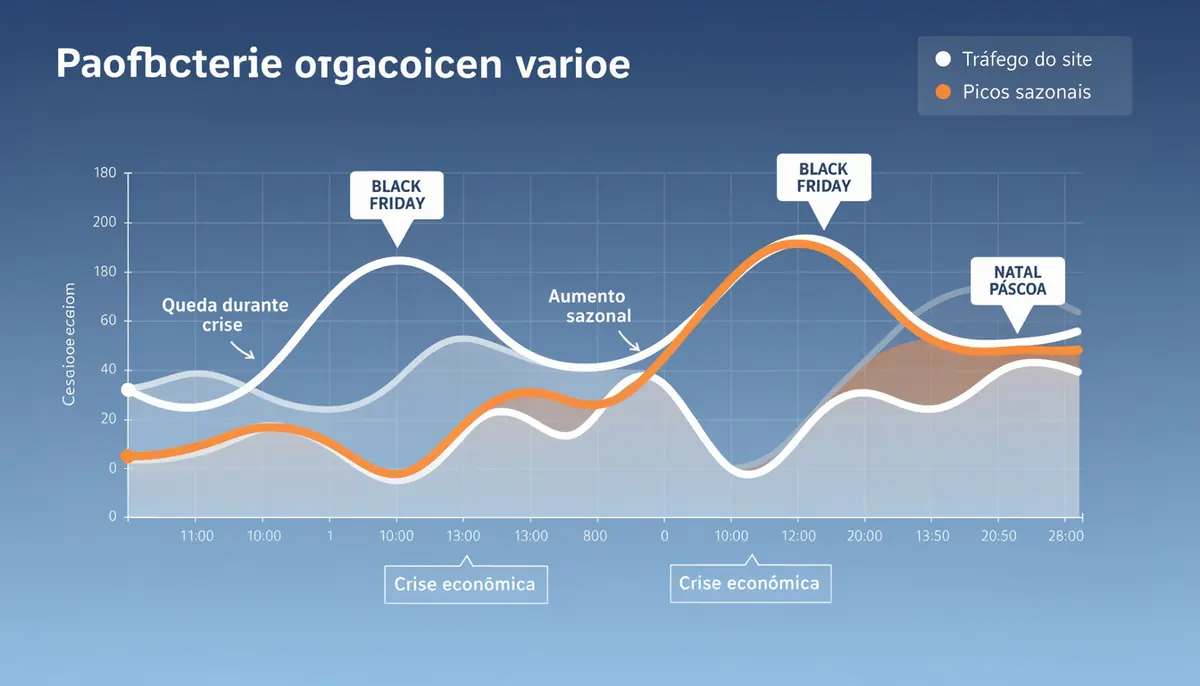
Because rankings and clicks measure different things. Position tells you where you appear. Clicks depend on how many people search, how appealing your result looks and what else is on the page. In weak economic conditions, searchers become more selective, and your result competes with ads, shopping modules, videos and AI-generated answers.
A simple equation to remember: good position + low interest or weak snippet = low CTR. It is not the end of the world, but it needs adjustments you can make quickly.
How do I diagnose the problem in Search Console?
Open the Performance report in Google Search Console, compare the last 28 days with the previous period, and look at impressions, clicks, CTR and average position together.
| What you see | Most likely cause | First action |
|---|---|---|
| Impressions down, position steady | Demand fell (seasonality, economy, interest) | Shift to angles with active demand, plan for the next peak |
| Position down, impressions down | Ranking loss (competition, update, technical or quality issue) | Audit and improve the page |
| Impressions and position steady, CTR down | Weaker snippet or more SERP features, including AI answers | Rewrite title and description, add rich result data |
| Clicks down on informational queries only | AI answers satisfying the query on the results page | Add depth and unique value, target queries that need a click |
This split matters because each cause has a different fix. Rewriting titles will not bring back demand that has genuinely dropped.
Which factors move CTR in a downturn?
- Macroeconomics: high prices, high interest rates and job insecurity reduce discretionary searches and shift attention to cheaper options.
- Cultural attention: when a topic dominates conversation, such as a big sporting event, an election or a viral show, related searches surge.
- Perceived relevance: words like "sale", "free shipping", "discount" or "payment plan" attract clicks when budgets are tight, provided the page delivers.
- SERP changes: AI Overviews, shopping carousels and video results change how many clicks go to classic listings. Read our guide to Google AI Overviews for what that means for you.
How can I lift CTR quickly on pages that already rank?
- Rewrite titles for the current context. In an inflationary period, terms like "deals", "coupon" or "budget-friendly" can matter. Only promise what the page delivers.
- Rewrite meta descriptions for the moment. Show the offer and the reason to act now, such as "free shipping until Sunday", but only if it is true.
- Earn richer snippets. For products, structured data for product listings can make price, availability and ratings eligible to appear in results.
- Check whether the audience still wants this. If demand fell, consider lower-ticket versions, bundles or different angles.
- Never mislead in the snippet. If visitors do not find the promised offer, they bounce back to the results, and a competitor benefits.
How do seasonal dates help, even in a downturn?
Predictable events light up organic search even when the economy is weak. Gifting holidays, shopping events and cultural moments create demand you can plan for. Examples include Valentine's Day, Mother's and Father's Day, back-to-school, Black Friday and Cyber Monday (November 27 and 30 in 2026), and the end-of-year holidays. Dates vary by country, so build your own calendar.
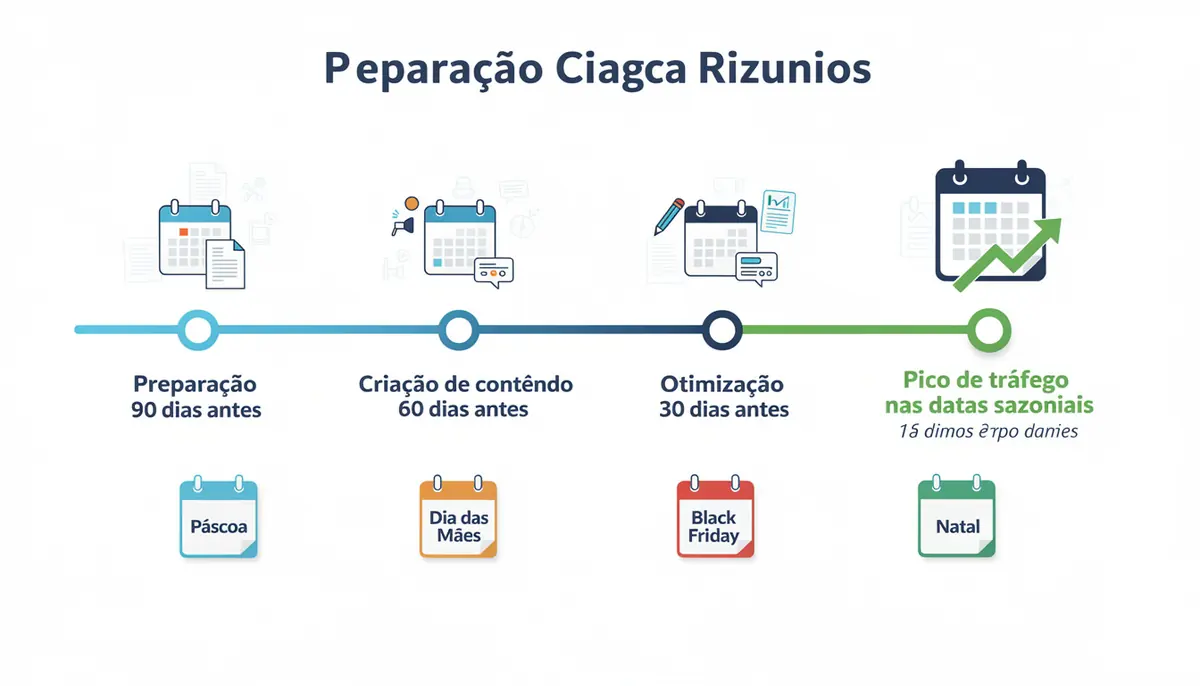
The principle is the same everywhere: strong sites win seasonal peaks because they arrive early. Authority, relevant content and a brand associated with the occasion all help a page rank when demand arrives. We are not going to quote traffic numbers for any specific brand, but the pattern holds: pages built and promoted before the date rank before the date.
How early should I prepare seasonal content?
Aim for about 60 to 90 days before the peak. Google needs time to crawl, index and evaluate new pages, and links need time to accumulate. Waiting until the week before the event means the ranking arrives after the demand is gone. Use Google Trends to see when interest in your topic starts to rise each year, then set your publish date ahead of that curve.
Should I create new pages or update old ones each year?
Update the same URL whenever possible. A permanent "Black Friday deals" or "gift ideas" page accumulates links and history year after year, and a refresh signals to Google that the page is current. Creating a fresh URL each year throws that equity away.
How do I plan for event-driven demand?
Some spikes are not annual, but they are visible long before they arrive:
- Elections: calendars, candidate and ballot guides, voting logistics. For example, midterm elections in the United States are scheduled for November 3, 2026.
- Major sporting events: guides, schedules, tables and previews. The 2026 FIFA World Cup in June and July is a recent example of a demand spike that rewarded content published weeks ahead.
- Entertainment and reality shows: voting, recaps, explainer content, if it fits your audience.
- Product seasons: gift guides, back-to-school kits, holiday bundles.
SEO takes time, so those who prepare early capture the peak almost alone.
What should I adjust for different economic conditions?
| Condition | What to emphasize |
|---|---|
| High inflation | Value, deals, coupons, payment plans, free shipping |
| Weak local currency | Locally produced alternatives, price stability, clear total costs |
| High interest rates | Lower-ticket products, pay-in-full discounts, cheaper alternatives to financing |
| Rising unemployment | Skills, side income, freelancing, job search and upskilling content |
| Fast-changing news or social trends | Timely explainers that fit your expertise, not trend-chasing |
How do I build an audience that does not depend on Google?
A weak quarter in search hurts less if you can reach your audience directly.
- Capture email, push or community sign-ups at traffic peaks so you can re-engage in the lulls.
- Send short re-engagement sequences: flash discounts, bundles, shipping bonuses, new-content alerts.
- Re-promote refreshed content: update an article, improve the title, then tell your list.
Owned channels turn a seasonal spike into lasting value instead of a one-off visit.
What is a practical plan I can start this week?
- Review your top 10 pages in Search Console and classify each as a demand, ranking or snippet problem.
- Rewrite titles and descriptions for the pages with a snippet problem, matching the real offer.
- List four seasonal dates relevant to your business and the pages to create or refresh 90 days before each.
- Add a simple email or push sign-up to your highest-traffic articles.
- Create a calendar of predictable events that overlap with your topics.
- Make sure any page that mentions "sale" or "discount" has a real, visible offer to avoid pogo-sticking.
- Plan links early. Seasonal pages that gain a few relevant backlinks ahead of the peak give search engines more trust signals when demand arrives.
If producing the seasonal and supporting content is the bottleneck, Contentor can help you generate SEO-optimized articles with AI, publish them to WordPress and watch the impact in Search Console. For where search is heading overall, read our SEO trends for 2026.
FAQ
Why did my clicks drop even though my rankings did not?
Clicks depend on demand, snippet appeal and SERP layout, not only position. Fewer searches, less compelling titles, or features like AI answers and shopping modules can reduce clicks while your ranking stays the same. Check impressions, position and CTR together in Search Console to find which one changed.
How early should I publish seasonal content?
Typically 60 to 90 days before the peak. That gives Google time to crawl and index the pages and gives you time to earn links and refine the content. Use Google Trends to see when interest in your topic starts rising each year and publish ahead of that point.
Should I update the same seasonal page every year?
Yes, whenever you can. Keeping one permanent URL, such as a Black Friday deals page, lets it accumulate links, history and authority over time. Refresh the content, dates and offers each season instead of publishing a new page from scratch.
Does adding words like "sale" or "free shipping" to titles help?
It can raise CTR when budgets are tight, but only if the page delivers what the title promises. Misleading snippets lead to quick bounces, which hurt the experience and send the click to a competitor. Match the title to a real, visible offer.
How do AI Overviews affect CTR?
For some informational queries, AI answers satisfy the searcher on the results page, which can reduce clicks to classic listings. Focus on content that offers depth, unique data or something that needs a visit, and measure query by query in Search Console rather than assuming the effect.
Plan ahead, not after the dip
Engagement in SEO is about context as much as position. When the economy tightens, CTR feels it, but seasonality opens windows of traffic and revenue that can make up for slow stretches. Prepare early, tune your snippets to the moment and build an audience you own. Contentor is built to help you produce and track the content that fills those windows.
Prepare your content for AI answers
Create AEO/GEO briefs, entities, schema, and structured articles for Google AI Overviews, AI Mode, and traditional SEO.
Try Contentor freeStrengthen your authority for AI Search
Combine source-worthy content with contextual backlinks on vetted sites to reinforce trust, discovery, and topical authority.
View contextual backlinks